
Last updated November 2, 2026
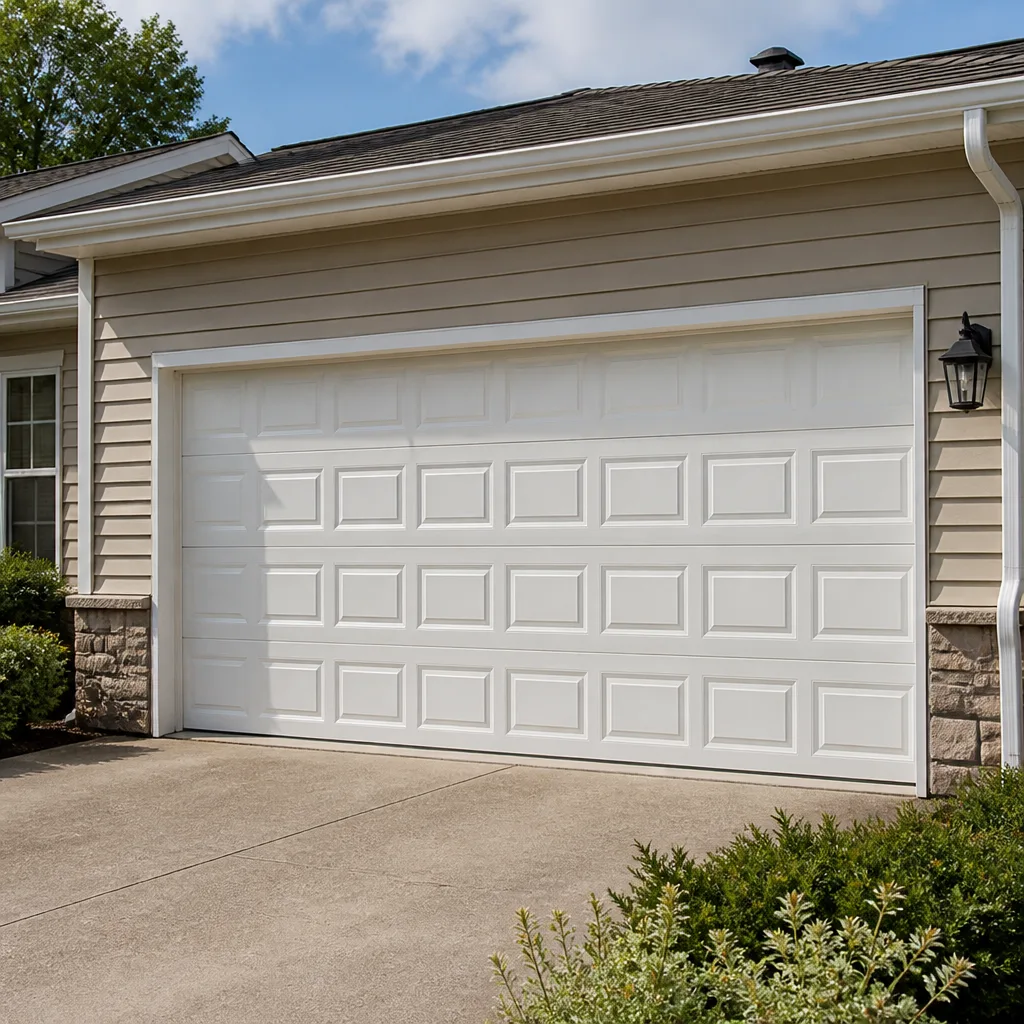 Raised-panel steel
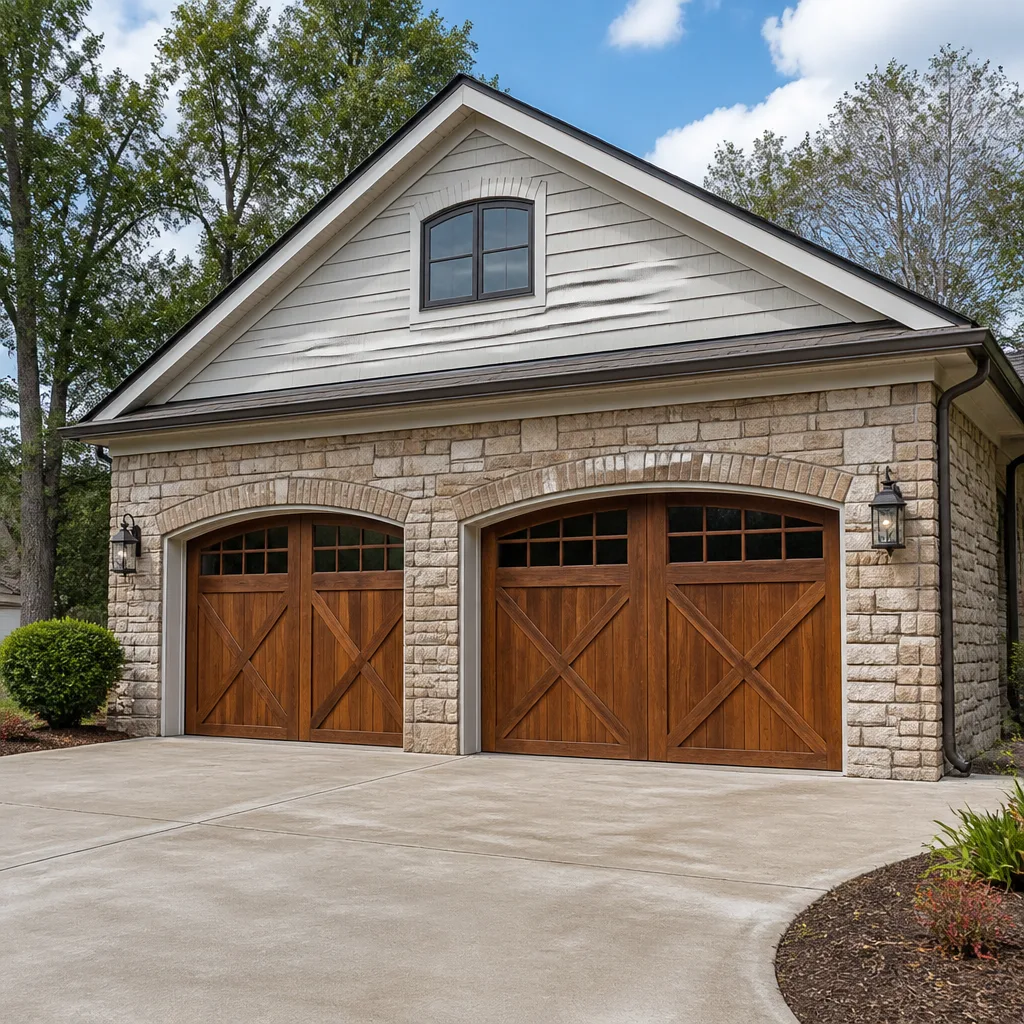 Carriage house
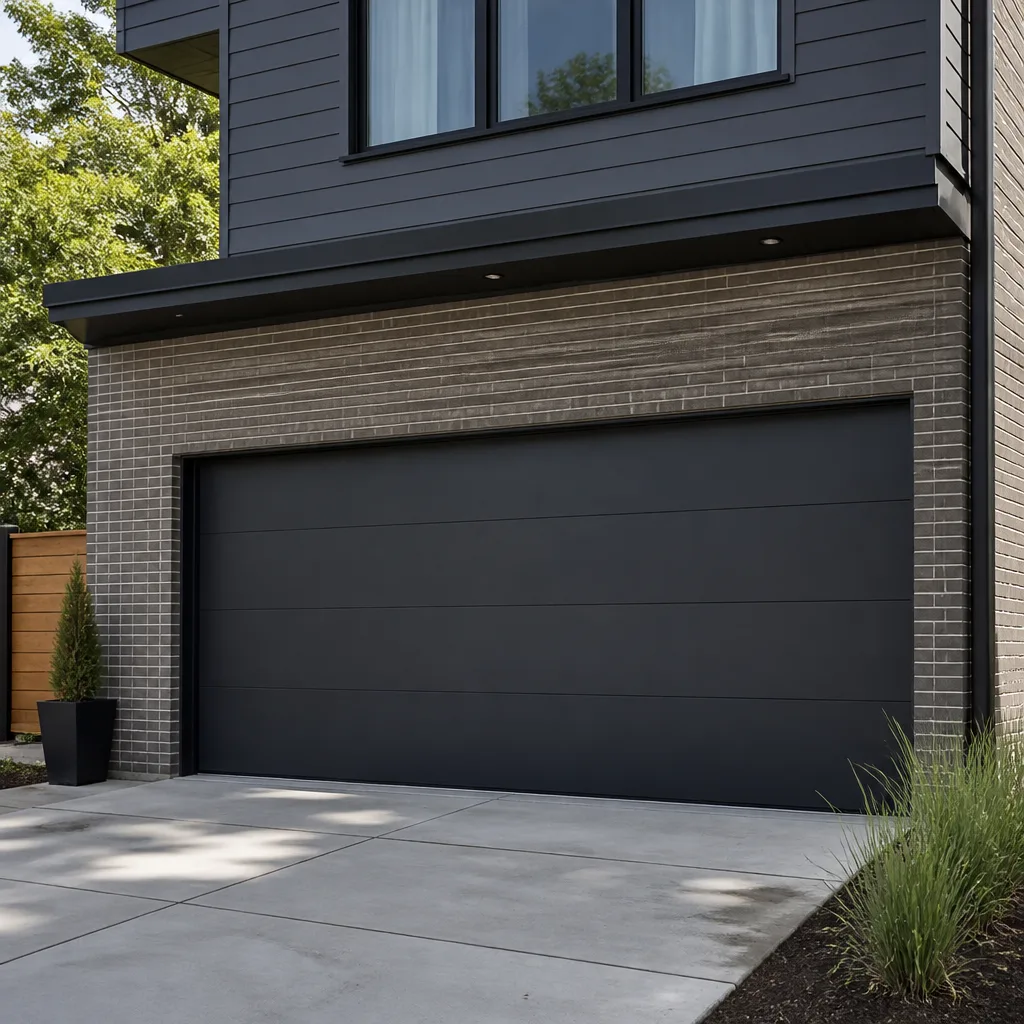 Modern flush
 Full-view glass
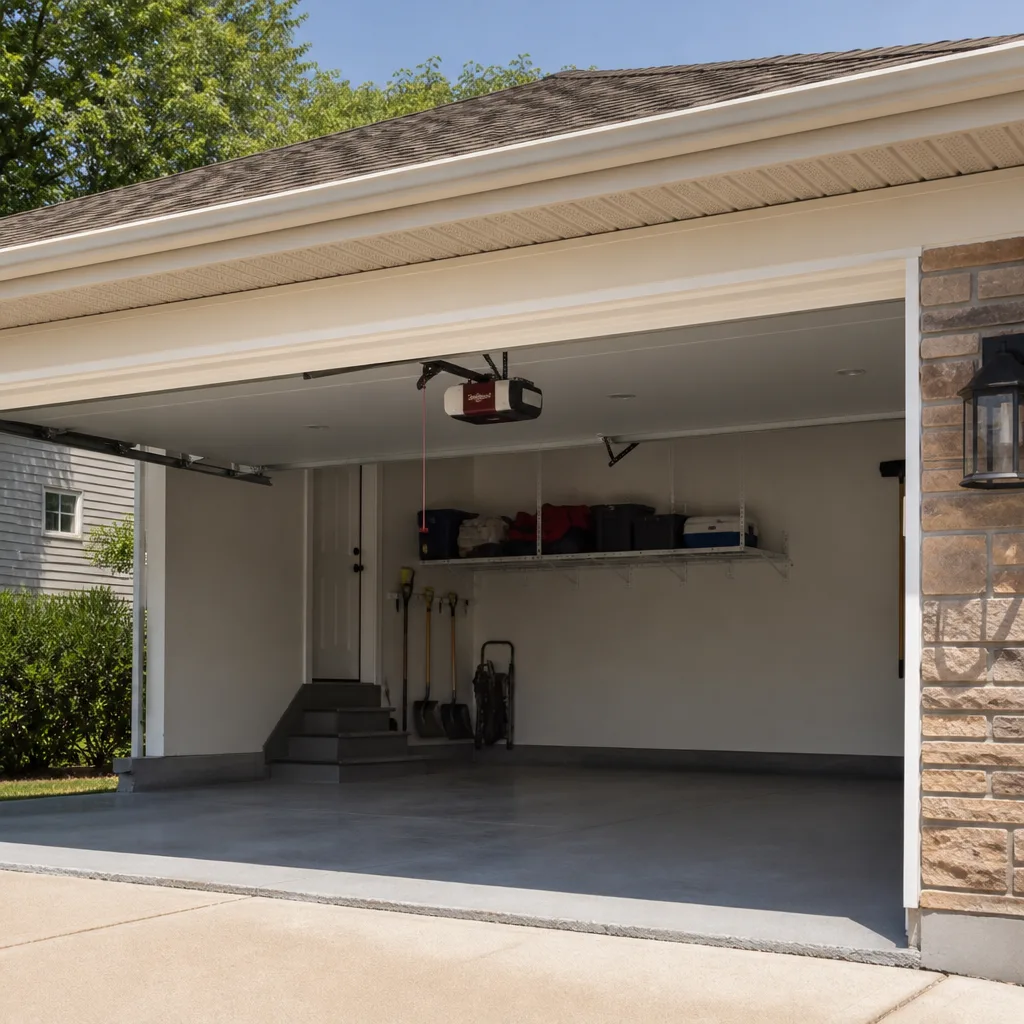 LiftMaster openers
 Chamberlain openers
Full 25-point door and opener safety check with every visit - springs, cables, rollers, tracks, and your LiftMaster or Chamberlain opener included
You get a price before we start. It does not change when the truck arrives.
Get your free estimateGarage Door Emergency Preparedness Guide for Studio City Homes
During the 1994 Northridge earthquake, garage doors were among the most commonly reported residential structural failures across the San Fernando Valley, including Studio City. Yet most emergency preparedness guides for LA homeowners cover food storage and go-bags without a single mention of whether your garage door will work when the power is out and the frame has shifted. This guide covers what those guides miss: how to operate your garage door manually in a blackout, what to inspect after seismic shaking, which battery backup systems actually work on heavier doors, and how wildfire evacuation readiness connects to your garage door’s condition. You’ll finish with a concrete, no-tools inspection routine you can do this weekend.
Quick Answer
Garage door emergency preparedness in Studio City means knowing three things: how to manually disengage and operate your door during a power outage, how to inspect your track and header bracket for damage after an earthquake, and whether your opener has a battery backup that can handle a heavier door under real-world conditions. You can test all three yourself in under fifteen minutes, and we’ll walk you through each one below.
Styles & brands we work with
- Raised-panel steel
- Carriage house
- Modern flush
- Full-view glass
- LiftMaster openers
- Chamberlain openers
Table of Contents
- How to Operate Your Garage Door During a Power Outage
- Post-Earthquake Inspection Protocol for Studio City Homes
- Battery Backup Openers: What’s Worth the Investment
- Wildfire Evacuation and Garage Door Readiness
- How to Check for Frame Shift After Seismic Activity
- Preventive Maintenance That Reduces Emergency Risk
- Teaching Your Household the Emergency Sequence
- Common Mistakes to Avoid
- When to Call a Professional
- Frequently Asked Questions
How to Operate Your Garage Door During a Power Outage
Every automatic garage door opener installed in the last four decades has a manual release mechanism, and in our experience roughly eight out of ten Studio City homeowners have never pulled it. The red cord hanging from your opener’s trolley is the emergency release. When you pull it, the door disengages from the motorized trolley and becomes fully manual. You can then lift the door by hand using the handle on the door itself. Here’s the sequence, step by step.
- Confirm the door is fully closed. Never disengage the opener while the door is mid-travel or open; gravity takes over fast.
- Locate the red emergency release cord hanging from the opener rail, typically near the front of the garage.
- Pull the cord down and toward the door. You’ll hear or feel a click as the trolley disengages.
- Grip the door’s manual handle, not the edges or the panels, and lift straight up with both hands.
- Lift until the door is fully open. A properly balanced door should stay open on its own; if it sinks back down, the springs need attention.
- To close, reverse the sequence. Pull the door down using the handle until it seats completely.
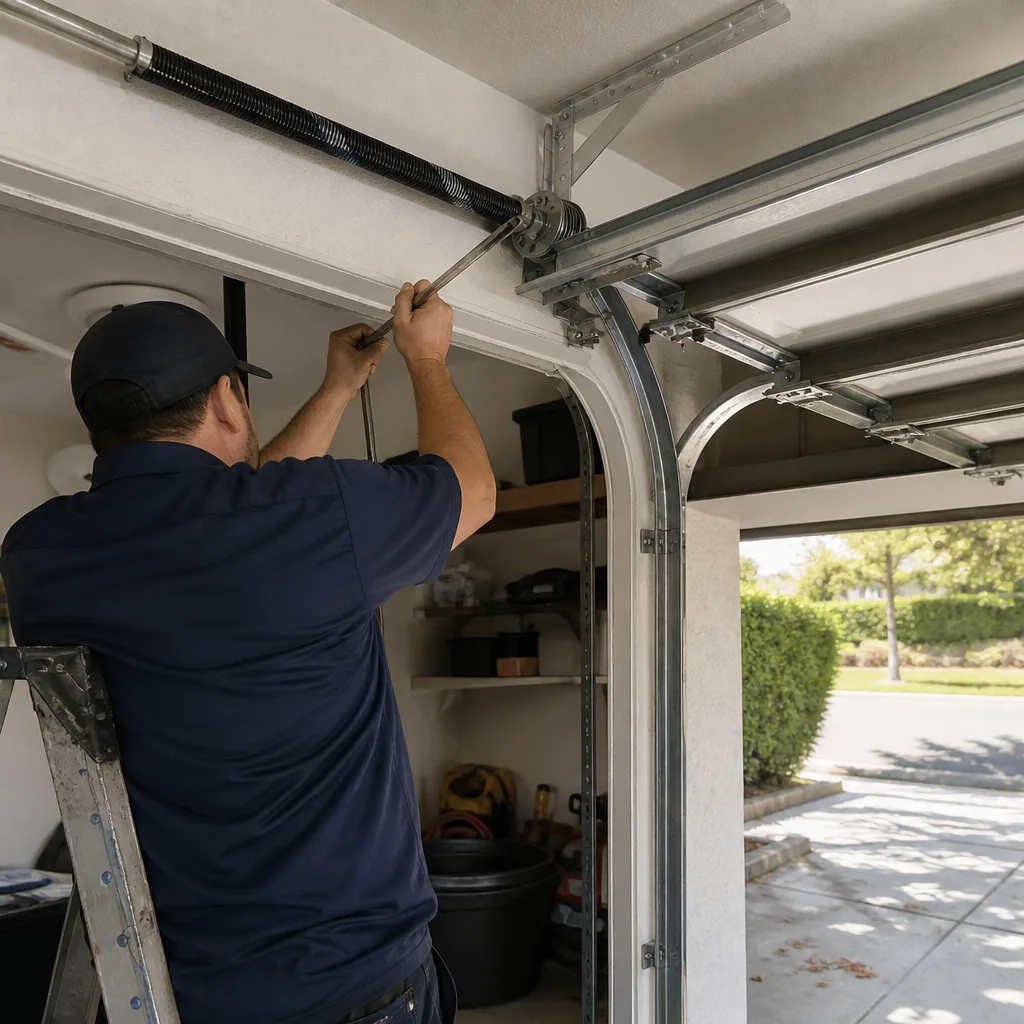
Here’s what most guides don’t tell you: if you have a door with no manual handle, which happens on some older models in the hillside homes above Ventura Boulevard, you’ll need to grab the door’s bottom edge with both hands. Never attempt this while standing directly beneath the door. Stand to the side. If the door feels unusually heavy or drops fast once you lift it, the extension springs or torsion springs are likely worn, and you’re fighting the full weight of a 150 to 400 pound panel system by hand. That’s a sign to call a professional before the next outage finds you unprepared. Our Garage Door Repair in Studio City service includes spring inspection as a standard part of every visit.
One more thing worth knowing: the manual release cord itself can fray or snap over time, especially in garages that get hot in summer. Studio City garages routinely hit 100 degrees plus in August, which accelerates wear on plastic components. Give the cord a visual check every few months. If the red paint is faded to pink and the cord feels brittle, replace it before you actually need it.
Post-Earthquake Inspection Protocol for Studio City Homes
After any significant ground shaking, the first instinct of most homeowners is to open the garage door to check on the street outside. That instinct can be dangerous. The Northridge earthquake bent thousands of door tracks, snapped header brackets, and shifted door frames across the San Fernando Valley, including right here in Studio City. A door that looks fine can bind mid-cycle, throw a cable, or drop. Here’s the sequence we recommend before you touch the opener button or the manual release.
- Do a visual sweep first. Stand inside the garage and look at both vertical tracks. Are they straight and parallel? Any gap between the track and the wall means movement has occurred.
- Check the horizontal track sections above your head. These are the most fragile part of the system. Look for bends, kinks, or separation at the joints where track sections connect.
- Look at the header bracket, the metal plate above the center of the door where the opener rail attaches. Any visible crack, any gap between the bracket and the wall, any rust-colored dust on the floor beneath it tells you the bracket moved.
- Examine both cables that run vertically along the sides of the door. They should be taut and seated inside their grooves on the drums. A slack cable or one that’s jumped the drum means the door is no longer under proper spring tension.
- Look at the door itself from inside. If you see daylight at the top corners or between panels where there wasn’t any before, the door or frame has shifted.
- Only after all five checks pass should you operate the door, and do it from the wall button, not the remote, so you’re standing beside the track where you can see what’s happening.
If the door binds, creaks in a new way, or stops partway through the cycle, stop. Do not force it. A door under spring tension that’s misaligned can throw a cable or shatter a spring, and the energy released from a torsion spring is enough to cause serious injury. Our team at Mustang Garage Door Service has seen doors that looked completely normal from the outside but had hidden track damage that would have failed catastrophically on the next full cycle. After any moderate earthquake, if your track inspection raises any question at all, get a professional out before you rely on that door again.
Battery Backup Openers: What’s Worth the Investment
Studio City’s power outage profile is different from most of Los Angeles. The hillside neighborhoods above Ventura Boulevard, the areas around Moorpark Street and the older sections near the LA River, all deal with overhead power lines, utility poles on steep grades, and Santa Ana wind events that bring down lines with regularity from September through November. When the power goes out, an automatic garage door opener without a battery backup becomes a dead switch and a locked door unless you know the manual release sequence we covered above.
Battery backup openers solve that problem, but not all of them are worth the money for every door. Here’s what we actually recommend based on the systems we service across Studio City:
- Doors under 200 pounds with modern openers: Most current Garage Door Opener models from LiftMaster and Chamberlain with integrated battery backup will run the door 10 to 20 full cycles on battery alone. That’s more than enough for a multi-day outage if you’re operating the door once or twice a day.
- Doors over 200 pounds, or older wood doors: A basic battery backup may struggle, especially if the door has any pre-existing balance issues. The battery’s output is designed for a door in good condition. On a heavy or marginally balanced door, the opener works harder, the battery drains faster, and you may get as few as three or four cycles. For these doors, we recommend testing your battery backup under load at least twice a year so you know its real-world capacity.
- Homes with no battery backup at all: Add-on battery backup kits exist for some opener lines, but they’re not universal. The cleaner solution, and often the cheaper one over three years, is upgrading to an opener with integrated backup when your current unit reaches end of life. The price difference on installation is modest, and the reliability gap is significant.
If you already have a battery backup opener, test it monthly. Unplug the opener, run the door through a full open and close cycle, and listen for strain. If the opener slows noticeably on battery versus wall power, the battery is degrading. Most backup batteries last three to five years in Studio City’s climate, and the heat of summer shortens that life considerably compared to coastal areas.
Wildfire Evacuation and Garage Door Readiness
Studio City sits within the Very High Fire Hazard Severity Zone, the LAFD designation that covers the hillside communities along the Santa Monica Mountains. When an evacuation order comes, minutes matter. The garage door is usually the primary vehicle exit for homes that park in an enclosed garage, and it’s also the piece of the house many people haven’t touched in months. If the door won’t open, or the opener fails when you need it most, you’re suddenly dealing with a structural exit problem in the middle of a life-safety situation.
Defensible space regulations also interact with your garage in ways most homeowners don’t think about. The 2023 updates to the State Fire Marshal’s defensible space rules and subsequent city-level adoptions require more clearance around structures, including garage doors. Embers accumulate at the base of garage doors and in the weather seal channel along the bottom edge. A torn bottom seal creates a gap where embers can enter, and the seal is also what keeps out leaves, debris, and the dry grass that Studio City’s hillsides produce in abundance. Keeping the bottom seal intact does double duty: it protects against ember intrusion and keeps the door operating cleanly on its tracks when you need to evacuate.
There’s a practical evacuation drill we recommend every Studio City household do seasonally, before fire season starts in earnest around August. Park the primary evacuation vehicle in the garage. Shut off the main breaker to simulate a power outage. Time how long it takes you to get from the living room into the garage, manually disengage the opener, lift the door fully, open the vehicle, start it, and back out. Most families do this drill once and discover a problem: the manual release cord is too high to reach comfortably, the door is heavier than expected, or the vehicle’s roof rack catches on the partially open door. Finding that out at 2 a.m. during a real evacuation is much worse than finding it on a Sunday afternoon.
How to Check for Frame Shift After Seismic Activity
Here’s a no-tools check that takes ninety seconds and tells you whether your garage door opening has shifted enough to make continued operation dangerous. You need nothing more than a piece of ordinary printer paper.
- Close the door fully.
- Take a sheet of printer paper. The gap between the closed door and the frame should be no more than half the thickness of a single sheet, roughly 0.002 inches, along the top and both sides.
- Fold the paper in half. That’s roughly 0.004 inches. Fold it again. That’s roughly 0.008 inches.
- Walk the folded paper along the seam where the door meets the frame. Any place where the folded sheet slides in easily indicates the door or frame has moved beyond normal tolerance.
- Do the same along the bottom seal where the door meets the concrete. Check the gap at both corners and the middle.
What this tells you: a frame shift of even a quarter inch changes the geometry of the entire door system. The tracks are bolted to the framing, so when the framing moves, the tracks move with it. That means the rollers that ride in the tracks are now slightly misaligned with the door panels they’re attached to. The result is accelerated roller wear, a door that shudders when it moves, and over time, a door that binds completely.
We see this most often in the hillside homes of Studio City built in the 1940s through the 1960s, where garage door openings were framed with redwood that’s now been through multiple wet-dry cycles on top of decades of minor seismic activity. A hairline gap you can’t see with the naked eye is normal. A gap you can measure with folded paper means the geometry is off and it’s worth having someone look at the track alignment before the door eats its own rollers or blows out a panel hinge.
Preventive Maintenance That Reduces Emergency Risk
Most garage door emergencies are not surprises, at least not in retrospect. They’re the slow accumulation of wear and small failures that finally compound into a broken spring, a snapped cable, or an opener that quits on a Tuesday morning. In our experience working on doors across Studio City, the homes that do three simple things have dramatically fewer emergency calls than the ones that do nothing until something breaks.
- Lubricate the moving parts twice a year. The rollers, hinges, and springs on a garage door in Studio City operate in heat, dry air, and dust. Metal on metal without lubrication wears faster than anywhere in the state. A spray of garage door lubricant on the hinges, the roller bearings, and the torsion spring twice a year takes five minutes and is the single highest-ROI maintenance task on the entire door system.
- Test the auto-reverse safety sensors monthly. Place a roll of paper towels under the closing door. The door should reverse within two seconds of contact. This is a federal safety requirement since 1993, not a nice-to-have, and a sensor that’s drifted out of alignment is also a door that may refuse to close at all during an emergency.
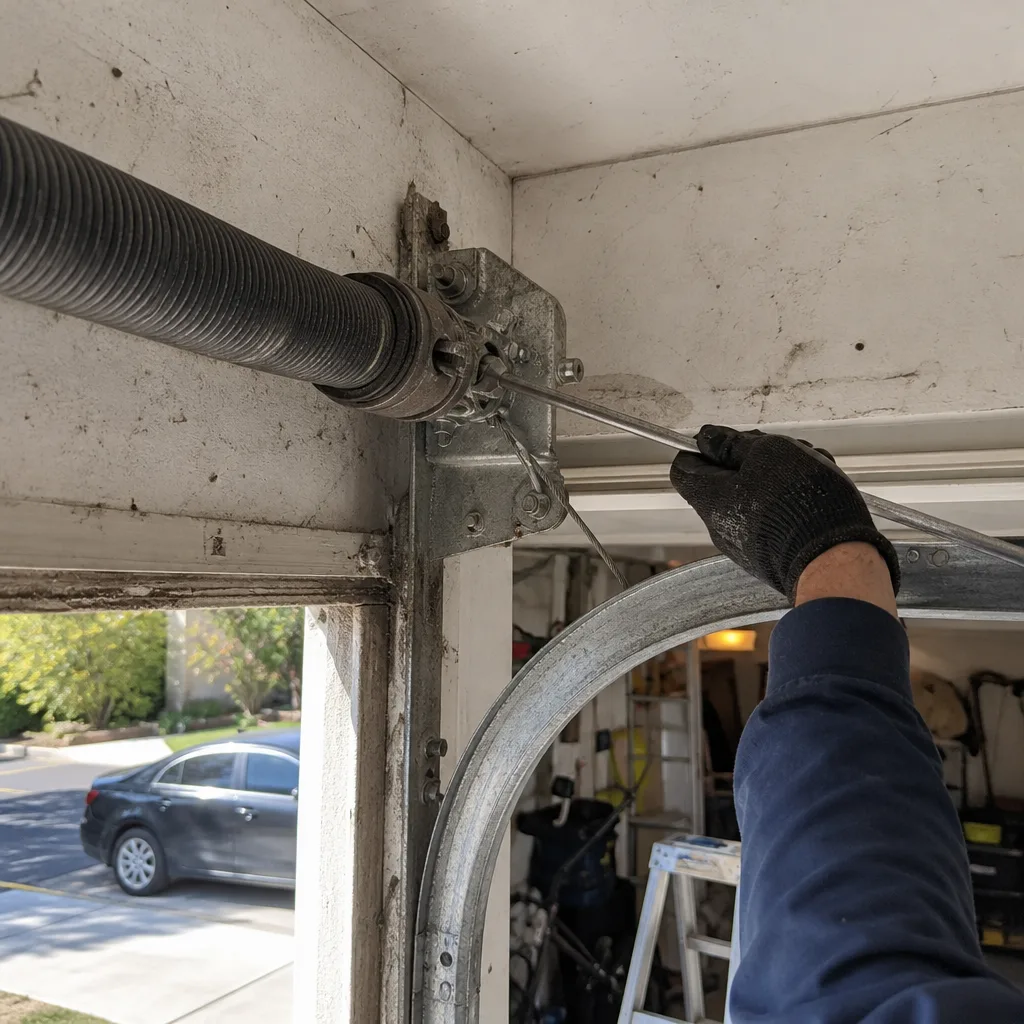
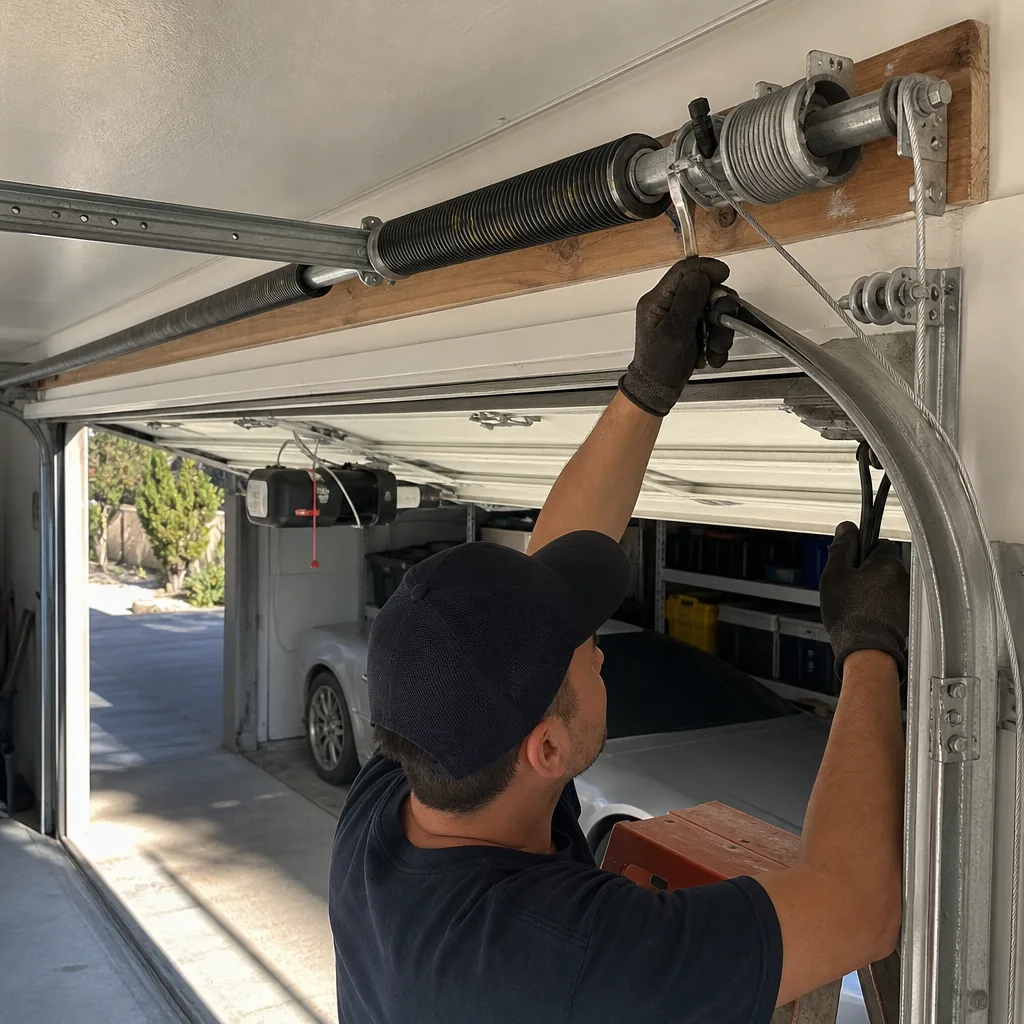
- Inspect the springs visually every season. A torsion spring with visible rust, a gap between coils, or a slight asymmetry side to side is a spring approaching failure. Springs have a cycle rating, and most stock springs on original doors in Studio City homes are rated for around 10,000 cycles. A door that opens four times a day hits that in about seven years. If your springs are nearing a decade old and you haven’t replaced them, you’re driving on borrowed time, and spring failure is the single most common reason a garage door becomes completely inoperable without warning.
These three tasks, done consistently, will catch 80 percent of the failures we see on emergency calls. The other 20 percent are things you can’t reasonably predict: a plastic gear strip in the opener, a bearing seizure, a rail buckle. Those call for professional repair to restore your door to reliable operation.
Teaching Your Household the Emergency Sequence
If you’re the only person in the home who knows how to manually operate the garage door, that knowledge disappears the moment you’re not there. Every household member old enough to drive or old enough to evacuate alone should know three things: where the emergency release cord is, how to pull it, and how to handle the door weight safely if the springs are in good condition.
Make this training concrete. It’s not a lecture, it’s a five-minute drill. Stand in the garage, point to the red cord, and have each person actually pull it and manually lift the door one time. The first time most people try this, they underestimate how heavy the door is even when it’s balanced properly. Better to discover that with you standing there than alone during a blackout or an evacuation. If the door is too heavy for someone in your household to lift comfortably, that’s not a sign that they’re weak, it’s a sign that the door’s spring balance is off or the door is simply a heavy model. A properly balanced door should be liftable by a typical adult with moderate upper-body strength. A young teenager may struggle regardless. In that case, the household emergency plan needs to account for that: make the main exit route one that doesn’t require that person to lift the door, or install a door with higher-cycle springs and test that it can be operated comfortably by every licensed driver in the home.
We also recommend writing or printing the emergency sequence and posting it near the garage door opener wall button. In a high-stress event, adrenaline degrades memory even when you’ve done the drill once. A laminated card with five bullet points is the difference between fumbling and executing. Keep it simple: what to pull, which direction, how to lift, where to stand, what to do if the door won’t move.
Common Mistakes to Avoid
- Testing the emergency release while the door is open. Pulling the cord with the door up and the springs under tension releases the trolley while the full weight of the door is elevated, and there’s nothing holding it back but your hands. The door can crash down faster than you can move out of the way. Always test with the door closed.
- Assuming the battery backup works without testing it. A backup battery that’s been sitting in a hot Studio City garage for four years may hold zero charge. Testing monthly is the only way to know. A dead backup battery on an outage day is worse than no backup at all, because it gives you false confidence.
- Forcing a door that binds mid-cycle. If the door hits resistance and stops, something is wrong. Hitting the button again, or worse, lifting manually against the resistance, turns a stuck door into a damaged track, a thrown cable, or a broken spring. Stop and inspect before you force anything.
- Ignoring a bottom seal that’s cracked or missing. The seal isn’t cosmetic. It deflects embers, keeps water out, and keeps dirt and debris off your track. Replacing a bottom seal is a ten-minute job that prevents a handful of bigger problems.
- Waiting until fire season to think about fire season. The time to test your garage door’s emergency operation is not the week the Santa Anas start. By then, every professional in the area is booked out. Test in the spring, fix in the spring, and enter fire season with a plan instead of a scramble.
When to Call a Professional
Some garage door work is genuinely DIY-friendly: lubricating moving parts, checking the auto-reverse sensor, even replacing a clicker remote. But there are lines you should not cross, both for safety and for the health of your door. If your door’s springs need replacement, the torsion spring under tension stores enough energy to cause life-threatening injury if it releases while you’re working on it. That’s a professional job, full stop. If your tracks are bent or misaligned, attempting to straighten them by hand often makes the problem worse and can shatter a roller. If your opener’s motor runs but the door doesn’t move, the problem is usually a stripped gear or a broken coupler, and the fix requires opening the unit and replacing internal parts. If your door has shifted on its frame after an earthquake and you’ve measured a gap with the paper test, the track geometry needs professional correction.
For any of these scenarios, and for a free inspection of your door’s emergency-readiness, our Garage Door Installation and repair team at Mustang Garage Door Service covers Studio City and the surrounding area. We work on every major residential brand, including LiftMaster, Chamberlain, Genie, Clopay, Amarr, Wayne Dalton, Craftsman, and Raynor, so whatever system is on your door, we already know it. Our Mustang Garage Door Service home page has more about our full range of services. Call us at (855) 633-3903 for a free estimate on any emergency preparedness upgrade, from battery backup installation to full spring replacement. The price is quoted and agreed before we start any work, so there are no surprises on the invoice.
Frequently Asked Questions
A new garage door opener with integrated battery backup typically runs $450 to $850 installed in Studio City, depending on the model, the door size, and whether any track or wiring upgrades are needed. Add-on backup kits are cheaper upfront, often $150 to $300, but they don’t work with every opener and their batteries tend to be smaller. Call (855) 633-3903 for an exact quote on your specific setup. Estimates are free.
We respond to emergency calls in Studio City and the surrounding areas as quickly as scheduling allows. Broken springs, doors that won’t open during an evacuation window, and doors that have come off their tracks are all priority calls. Call (855) 633-3903 and we’ll give you a straight answer on timing and a firm price before we dispatch.
No. We quote the price before we start and we honor it. If we discover something additional during the repair, we stop, show you what we found, and get your approval before doing anything else. You’ll never get a surprise invoice from Mustang Garage Door Service.
We carry stock for all eight brands we service: LiftMaster, Chamberlain, Genie, Clopay, Amarr, Wayne Dalton, Craftsman, and Raynor. Common springs, cables, rollers, gears, and remotes are on our trucks when we arrive. Obscure or custom parts may need to be ordered, and we’ll tell you that upfront before you commit to anything.
Follow the five-step inspection protocol detailed in this guide before operating your door after significant shaking. If all five checks pass, operate the door once from the wall button while standing beside the track. If anything binds, creaks, or moves differently than before the quake, stop and call us at (855) 633-3903. A professional track inspection is far cheaper than a door that falls off its rails.
Test the manual release and the battery backup monthly. Test the auto-reverse sensor monthly too. Do a full emergency evacuation drill, including the power-outage simulation and vehicle exit, once per season. Given Studio City’s wildfire and seismic risk profile, a seasonal cadence matches the actual threat environment you live in.
The Bottom Line
Your garage door is a structural component, a vehicle exit, and a fire-ember barrier, and it’s the piece of your home emergency plan that almost everyone forgets. The 1994 Northridge earthquake proved the vulnerability, and Studio City’s combination of wildfire zones, hillside power lines, and seismic activity keeps that vulnerability current. The good news is that the core skills are simple: know where the release cord is and use it correctly, inspect the track and header after shaking, test the battery backup before the outage, and keep the springs and rollers maintained. Fifteen minutes of attention this weekend buys a door that works when everything else is failing. If your inspection turns up anything questionable, call Mustang Garage Door Service at (855) 633-3903 for a free estimate. We’ll make sure your door is ready for whatever Studio City throws at it.
Written by the team at Mustang Garage Door Service, serving Studio City since 2011.
See the difference
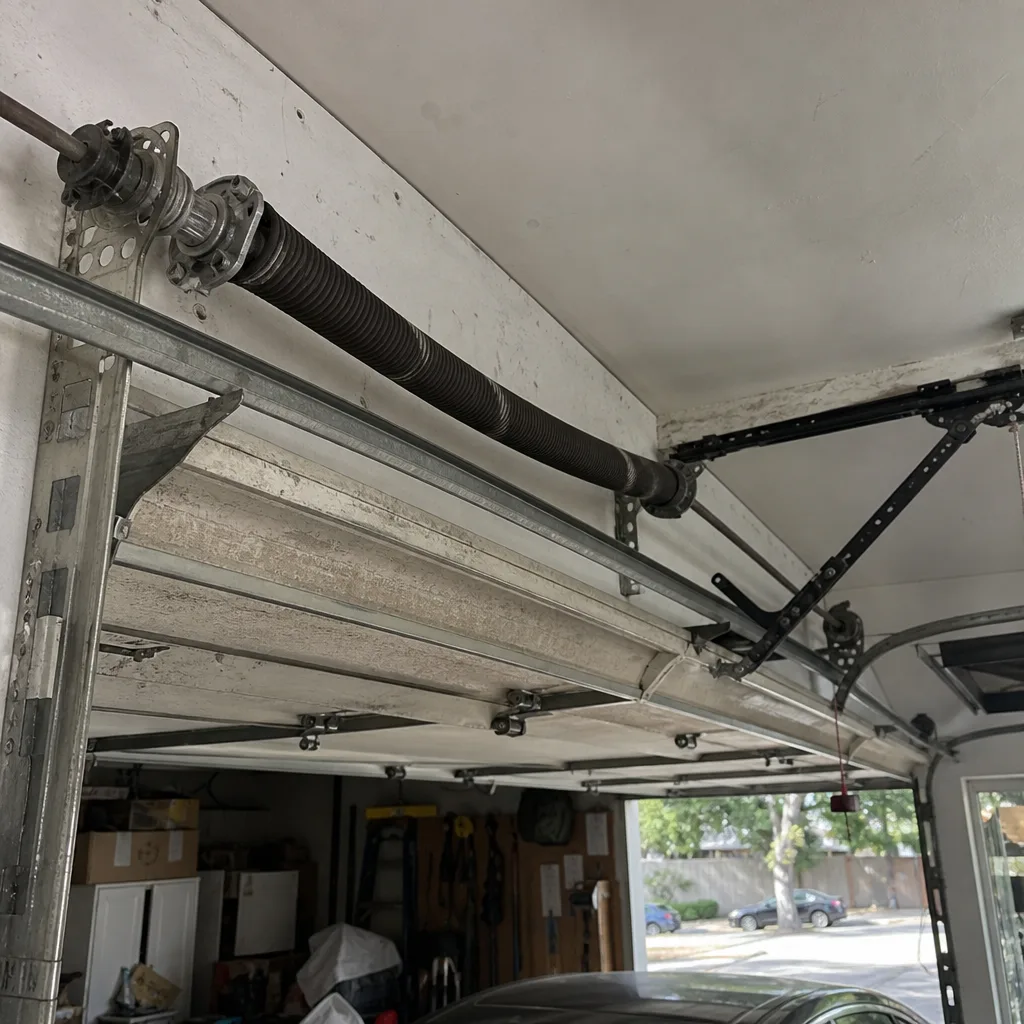 Before
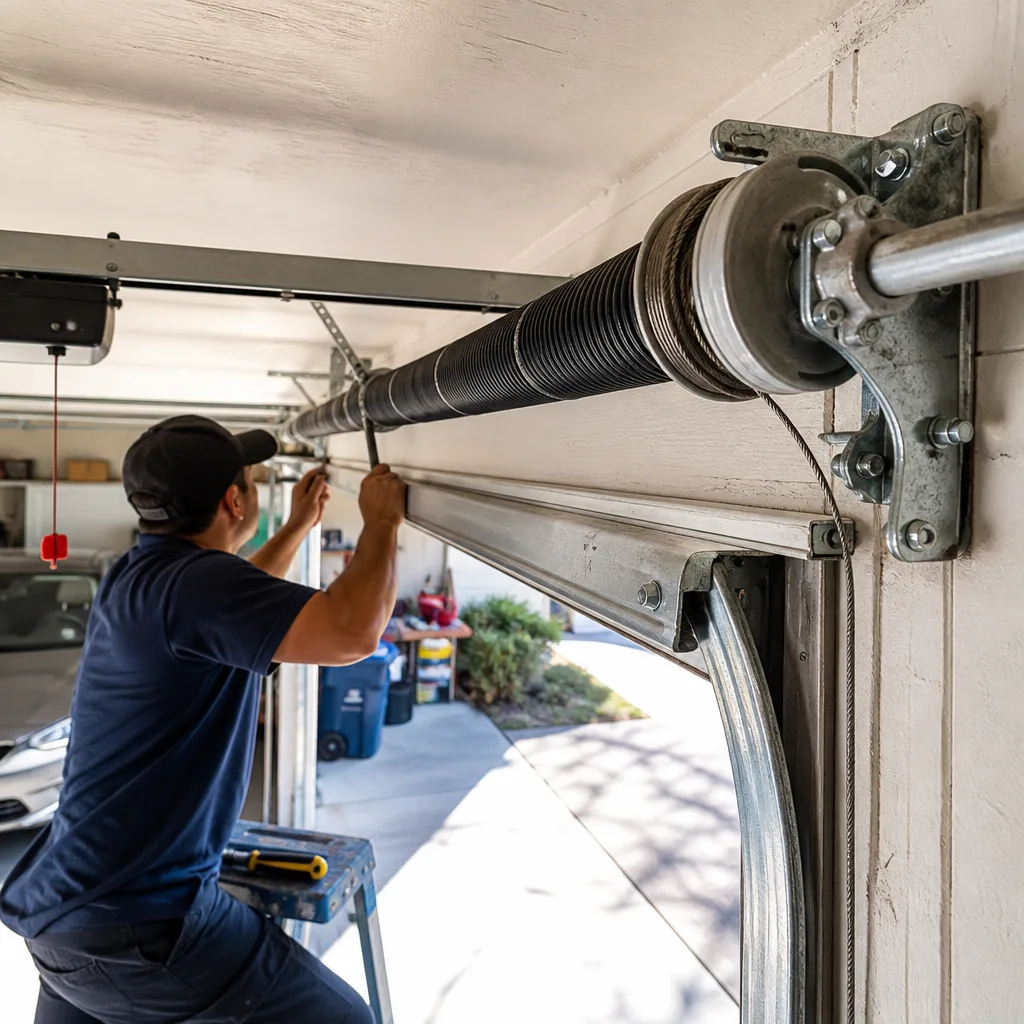 After
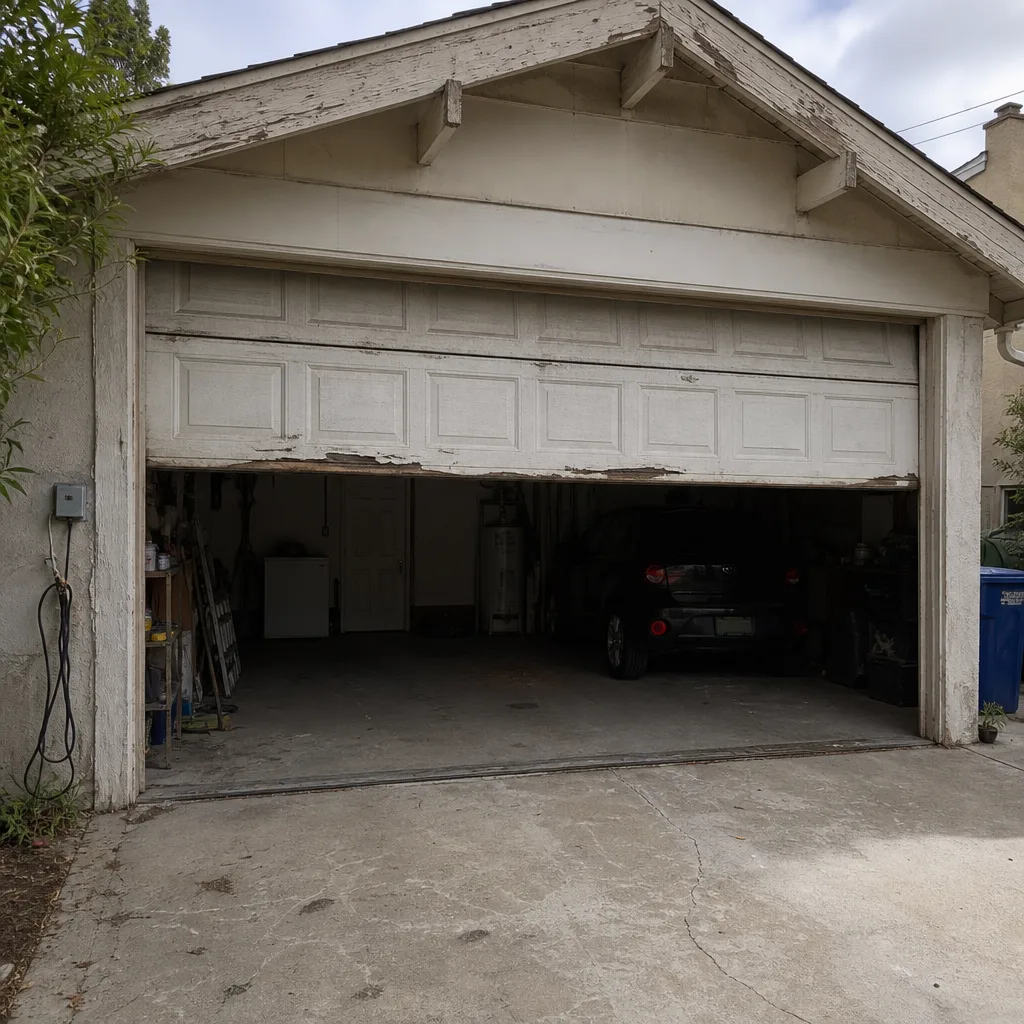 Before
 After
 Before
 After